Carlos Scarpero, VA Mortgage Specialist, NMLS 1674385

VA Renovation Loans in Ohio
Last reviewed September 11, 2026
House needs work? See if a VA renovation loan fits. 30 second quiz.

Yes, the VA renovation loan is real. VA will guarantee a loan that covers the purchase of a house plus the repairs it needs, in one loan, with no down payment. The reason you keep hearing it does not exist is that very few lenders offer it, and the ones that do add their own rules on top of the VA's, which is where almost every number you find online comes from.
I am Carlos Scarpero, a mortgage loan originator with Edge Home Finance in Dayton. Ohio has old housing stock, so I have this conversation constantly: the house is affordable, the price is right, and it needs a roof, a furnace and a kitchen. In the article below I will tell you the straight answer first, then the VA rule behind it, and a clear line between what VA actually requires and what an individual renovation lender decided to add on top. If a lender has already told you the house is not livable enough or the budget is too big, read the property and lender sections, because that answer is usually about the lender, not about the VA.
What is on this page
- Is the VA renovation loan real, and what does VA actually require?
- How is it different from seller repairs, a repair escrow or a construction loan?
- What are VA Minimum Property Requirements, and how does renovation financing fix them?
- Does the house have to be habitable? VA rule versus lender rule
- How do the price, the repair budget and the as-completed appraisal work together?
- What happens if the as-completed value comes in short?
- What repairs are eligible, and what do lenders exclude?
- Why do renovation lender rules vary so much, and how big can the budget be?
- What do renovation rates and costs actually look like?
- Does your contractor have to be VA approved?
- What happens after you close on a VA renovation loan?
- How different are draws, inspections and deadlines from lender to lender?
- What is a contingency reserve, and how much do you need on an Ohio house?
- What if you want to change the project after closing?
- What is different about renovating an older Ohio house?
- What about rural Ohio: wells, septic, access and outbuildings?
- Can you use it on a condo, a duplex, a manufactured home or a refinance?
- Would FHA 203(k), HomeStyle or a cash-out refinance be a better tool?
- What can kill a VA renovation deal, and when is it the right tool?
- Ohio VA renovation questions I get every week
- How do we start on your house?
Is the VA renovation loan real, and what does VA actually require?
The VA authority is two short paragraphs in the handbook, and it is worth reading them because they are the whole VA rulebook on this.
VA HANDBOOK EXCERPT
“The alterations and repairs must be those ordinarily found on similar property of comparable value in the community.”
That is the VA test for what work is allowed. Roofs, mechanicals, kitchens, baths, windows, flooring and accessibility work on an ordinary Ohio house pass it easily. A pool or an outdoor kitchen does not.
Source: VA Lender’s Handbook (Pamphlet 26-7) – Chapter 7: Loans Requiring Special Underwriting, Topic 4
VA also allows this on a home you already own and occupy, not just on a purchase. And there is a second, separate route in the handbook for someone who already has a VA loan on the property, called a supplemental loan.
What the VA rulebook actually says, and does not say
- It says VA may guarantee alteration and repair financing, on a purchase or on a home you already own and occupy.
- It says the work has to be ordinary for comparable homes in the community.
- It says the cost may be financed only to the extent the value supports the loan amount.
- It does not set a maximum repair amount, a number of draws, a completion deadline, a credit score, a contingency percentage or contractor requirements. Every one of those numbers comes from a lender.
That last point matters more than anything else on this page. The circular that used to spell out draws, contingency reserves and contractor registration, Circular 26-18-6, was rescinded April 1, 2020. The PDF is still sitting on VA's website, which is why blogs keep quoting it, and a couple of current lender guides still cite it as their authority. If someone tells you “VA requires” a 15 percent contingency or a six-month completion window, they are quoting a rescinded document or their own overlay.
Looking at a fixer-upper in Ohio? See if you qualify in 30 seconds.
How is it different from seller repairs, a repair escrow or a construction loan?
Four different tools get confused with each other constantly. Here is the honest comparison.
| Tool | What it does | When it is the right answer |
|---|---|---|
| VA renovation loan | One loan covers purchase price plus approved repairs; work is done after closing and paid from an escrow through draws | The house needs real work you cannot pay for in cash, and the seller will not fix it |
| Seller repairs before closing | Ordinary purchase; the seller fixes what the appraiser required | Small MPR items and a motivated seller. Simplest path, always ask first |
| Repair escrow for postponed completion | A limited VA tool: funds held so the loan can close before minor exterior work is finished | Weather-delayed items like a driveway, walkway, exterior paint or landscaping |
| VA construction loan | Builds a house from the ground up, with construction draws and inspections | New construction, not a rehab |
VA HANDBOOK EXCERPT
“the duration of the postponement must not be unreasonable (usually 90 to 120 days), and”
This is the repair escrow rule, and it is why that tool does not solve a real renovation. It is for a short list of postponed items, and VA also requires the escrow to hold at least one and a half times the estimated cost of the work.
In an Ohio spring that distinction comes up all the time. Driveway and paint can be postponed. A furnace, a roof and a gutted bathroom cannot.
Not sure which of these four you actually need?
Answer a few questions about the house and the repairs and I will point you at the right structure instead of the most complicated one.
Start the VA Loan PathfinderWhat are VA Minimum Property Requirements, and how does renovation financing fix them?
Minimum Property Requirements are VA's condition standards for the house itself. They are not about your credit or your income. They are VA's way of making sure the home it is guaranteeing is safe to live in, structurally sound and sanitary, and that it will still be worth something if the loan ever goes bad.
VA HANDBOOK EXCERPT
“VA has established Minimum Property Requirements (MPRs) to protect the interests of Veterans, lenders, servicers, and VA. Properties must meet these requirements prior to guaranty of the loan by VA.”
Read the last sentence again, because it is the sentence the whole renovation program hangs on. The property has to meet MPRs before VA guarantees the loan, which is not the same as before you close.
Source: VA Lender’s Handbook (Pamphlet 26-7) – Chapter 12: Minimum Property Requirement, Topic 1
VA HANDBOOK EXCERPT
“MPRs help ensure that the property is safe, structurally sound, and sanitary. The scope of MPRs also includes issues related to the property’s location and legal considerations.”
Safe, structurally sound and sanitary is the three-word test an appraiser is applying. Location and legal items, like access and zoning, count too.
Source: VA Lender’s Handbook (Pamphlet 26-7) – Chapter 12: Minimum Property Requirement, Topic 1
Which property conditions does VA actually address?
Chapter 12 runs 43 topics. These are the ones that come up on Ohio houses, with the topic number so you can look them up yourself instead of trusting me or any other website.
| Condition | What the current handbook requires | Chapter 12 topic |
|---|---|---|
| Roof | The covering has to keep moisture out and give reasonable future utility, durability and economy of maintenance. If a defective roof with three or more layers of shingles is replaced, the old shingles have to come off first | Topic 26 |
| Electrical | Each living unit needs electricity for lighting and necessary equipment, and any visible frayed or exposed wiring must be repaired | Topics 14, 22 |
| Heating | Heat must be permanently installed and hold at least 50 degrees in areas with plumbing. Air conditioning is not required, but if it is there and obviously broken, the appraisal is written subject to repair by a licensed contractor | Topic 23 |
| Plumbing, water and sewer | Continuous safe and potable water for drinking, bathing and sanitary use, hot water, sanitary facilities and a safe method of sewage disposal | Topics 15 to 19 |
| Wells and septic | Individual water quality has to satisfy the health authority with jurisdiction, testing must be done by a disinterested third party, and an individual sewage system must dispose of waste without creating a nuisance or endangering public health | Topics 16, 17, 18 |
| Structure and defects | Conditions that impair safety, sanitation or structural soundness make the property unacceptable until they are remedied and further damage is ruled out. The named examples include settlement, excessive dampness, leakage, decay and termites | Topic 21 |
| Hazards and health and safety | The property must be free of hazards that affect occupant health and safety, structural soundness, or customary use and enjoyment of the property | Topic 20 |
| Peeling paint | On a home built before 1978 lead-based paint is presumed, and defective paint is a safety hazard that has to be remediated. Economic feasibility is not an acceptable reason to waive a lead paint repair, and the VA appraiser has to certify that repair | Topic 32 |
| Access | Safe and adequate pedestrian or vehicular access from a public or private street with an all-weather surface, and private roads need a permanent easement plus a maintenance arrangement | Topic 4 |
| Wood-destroying insects | Apparent infestation, fungus growth or dry rot has to be reported, the appraisal is prepared subject to an inspection, and all damage must be repaired. Ohio is on VA's statewide list, which I cover in the Ohio section below | Topic 33 |
VA HANDBOOK EXCERPT
“Conditions which impair the safety, sanitation, or structural soundness of the dwelling will cause the property to be unacceptable until the defects or conditions have been remedied and the probability of further damage eliminated.”
This is the sentence that turns a house into a renovation candidate instead of a normal purchase. Unacceptable until remedied is not the same as unacceptable forever.
Source: VA Lender’s Handbook (Pamphlet 26-7) – Chapter 12: Minimum Property Requirement, Topic 21
The full chapter is here, and I would rather you read it than take my word for it: VA Lender’s Handbook, Chapter 12, Minimum Property Requirements. If you are a Realtor or a loan officer, that link settles most arguments in about four minutes. My plain-English summary page is here, but the handbook is the controlling source.
What normally happens on a regular VA purchase when the house fails an MPR?
VA HANDBOOK EXCERPT
“The appraiser will prepare origination appraisals "subject to" the completion of any MPR repairs that appear to be needed and include the contributory value of the completed repairs in the estimated market value.”
On a standard purchase, that means somebody has to fix the item before the loan is guaranteed, and normally before closing: the seller does it, the buyer negotiates it, or the deal falls apart. That is where most Ohio fixer-uppers die.
Source: VA Lender’s Handbook (Pamphlet 26-7) – Chapter 12: Minimum Property Requirement, Topic 1
Two other routes exist on a normal purchase, and it is worth knowing them because a renovation loan is not always the answer. A veteran can ask VA to waive an MPR repair, and VA will consider it if the veteran signs the request, the lender concurs, and the property is still habitable from a safety, structural soundness and sanitation standpoint. Or a lender can escrow for the repair, with a hard VA limit on the back end:
VA HANDBOOK EXCERPT
“Lenders may hold funds in escrow for repairs to be completed after closing, however all repairs must be completed and escrowed funds distributed before the loan may be guaranteed by VA.”
That is the finish line for any of these structures, renovation loan included. The work gets done, the money gets released, the file gets inspected, and then VA guarantees the loan. Nobody skips that step.
Source: VA Lender’s Handbook (Pamphlet 26-7) – Chapter 12: Minimum Property Requirement, Topic 43
So how does renovation financing fix an MPR problem?
It moves the repair to the other side of closing and puts the money for it in the loan. The appraiser values the house as if the scope in your contractor's bid is already finished, the loan closes on that as-completed value, the renovation money sits in an escrow, the contractor gets paid in draws as the work is inspected, and the MPR deficiencies get cured during that window. Then a VA appraiser signs off on the finished house.
The sequence that has to happen before the file is really done
- The scope in the bid actually gets built, including the items the appraiser flagged.
- Required inspections happen and the draws get released against them.
- Local permits and inspections are closed out, which is a city or county requirement, not a VA one.
- A VA-assigned appraiser completes the final inspection with the property 100 percent complete.
- Repairs are complete and escrowed funds are distributed, which is what VA requires before it guarantees the loan.
Not sure whether your house has an MPR problem or a bigger problem?
Send me the address and the inspection or appraisal notes. I will tell you which items are MPR items, which are cosmetic, and whether this needs a renovation loan at all.
Walk me through my scenarioDoes the house have to be habitable? VA rule versus lender rule
This is the single most misquoted rule in VA renovation lending, so I want to be precise about it. The words “habitable at closing” do not appear in VA's alteration and repair guidance. Chapter 7, Topic 4 says nothing at all about the condition of the house at closing or whether you can live in it during construction. The only place Chapter 12 uses the word habitable is in the MPR waiver topic, as one of the conditions for waiving a repair.
VA HANDBOOK EXCERPT
“the property is habitable from the standpoint of safety, structural soundness, and sanitation.”
That is a condition for VA waiving a required repair. It is not a rule that every renovation house has to be move-in ready on closing day.
Source: VA Lender’s Handbook (Pamphlet 26-7) – Chapter 12: Minimum Property Requirement, Topic 43
VA rule vs lender rule
What VA actually requires
The property has to meet MPRs before VA guarantees the loan, and on a renovation structure that happens after the work is finished and inspected. VA does not impose a separate day-of-closing livability test on an alteration and repair loan, and it does not tell you whether you may occupy the house while the contractor is working.
What an individual renovation lender may require on top of it
Renovation lenders absolutely do. One current wholesale program states that the home must be habitable at application, at closing and during construction, and that projects which prevent occupancy are ineligible. Another one does not use a habitability test at all, but requires construction to start within 15 days of closing and treats a stoppage of more than 15 consecutive days as a default. Both documents were verified September 10, 2026, and both can change without notice.
Just because VA permits a property or a scope does not mean every VA renovation lender will finance it. When a lender says no, ask whether that is a VA rule or their rule, and ask them to point at the source.
What that means in practice in Ohio: a dated house with a bad roof, an ancient furnace and an ugly kitchen is a good candidate at most programs. A gutted vacant on a Cleveland or Dayton street that has been open to the weather for two winters usually is not, at least not with this product, and that is a lender decision rather than a VA prohibition. If one lender turns the property down, the house may still be financeable somewhere else, which is exactly why I shop the file instead of quoting you one program's rules as gospel.
How do the price, the repair budget and the as-completed appraisal work together?
This is the most important section on the page, and it is where deals actually die. Spending $75,000 on renovations does not automatically make the house worth $75,000 more. The appraiser is not adding up your receipts. They are estimating what the finished house is worth in that neighborhood, based on what comparable finished houses have sold for.
On a purchase, the financing is limited by the lower of two numbers: your acquisition cost, and the as-completed value the appraiser supports.
VA HANDBOOK EXCERPT
“The cost of alterations and repairs to structures may be included in a loan for the purchase or regular “Cash-Out” refinance of improved property to the extent that their value supports the loan amount.”
Read that carefully. The renovation dollars are financeable only as far as the finished value carries them. The appraiser gets the contractor's bid and values the house as completed, and the lender's worksheet uses the lesser of that value or the acquisition cost.
Source: VA Lender’s Handbook (Pamphlet 26-7) – Chapter 7: Loans Requiring Special Underwriting, Topic 4
Acquisition cost is not just price plus repairs. On a current correspondent profile it is the sales price, plus the repair bid, plus the contingency reserve, plus inspection fees, title update fees and permits. Here is the arithmetic on a realistic Ohio project, with round illustrative numbers.
| Line | Amount |
|---|---|
| Purchase price | $175,000 |
| Contractor bid for repairs | $75,000 |
| Total project cost | $250,000 |
| What the borrower assumes the finished house is worth | $250,000 or more |
| As-completed value the appraiser actually supports | $235,000 |
| The gap someone has to solve | $15,000 |
Nobody gets to ignore that $15,000. Under VA's own rule the repair costs are financeable only to the extent the value supports the loan amount, and every renovation program runs the same lesser-of test on its maximum mortgage worksheet. So the loan gets sized off $235,000, not $250,000, and the difference has to come out of the scope, the price or your pocket.
Why does the as-completed value come in short?
Four reasons I see over and over
- Some improvements have a poor dollar-for-dollar return. A new furnace and a new roof are necessary, and buyers expect them, so they add far less value than they cost.
- Contractor pricing is not market value. A $30,000 kitchen in a neighborhood of $180,000 houses does not produce a $30,000 lift, no matter what the invoice says.
- Over-improving relative to the neighbors backfires. The appraiser is bound by comparable finished sales in that community, and there is a ceiling in every Ohio neighborhood.
- Surprise construction costs do not create value. Discovering another $12,000 of electrical work makes the house safer and legal, not more valuable to the next buyer.
This is sharper in Ohio than on the coasts. In a Dayton, Toledo, Youngstown or east Cleveland neighborhood where finished houses sell for $150,000 to $200,000, a $60,000 to $75,000 renovation very often does not appraise, no matter how necessary the work is. In Columbus, the Cincinnati suburbs, Dublin or Mason there is more headroom for a big scope. The practical move is to price the scope against realistic comparable sales before you write the offer, not after the appraisal lands.
Story time: a plan with a date on it
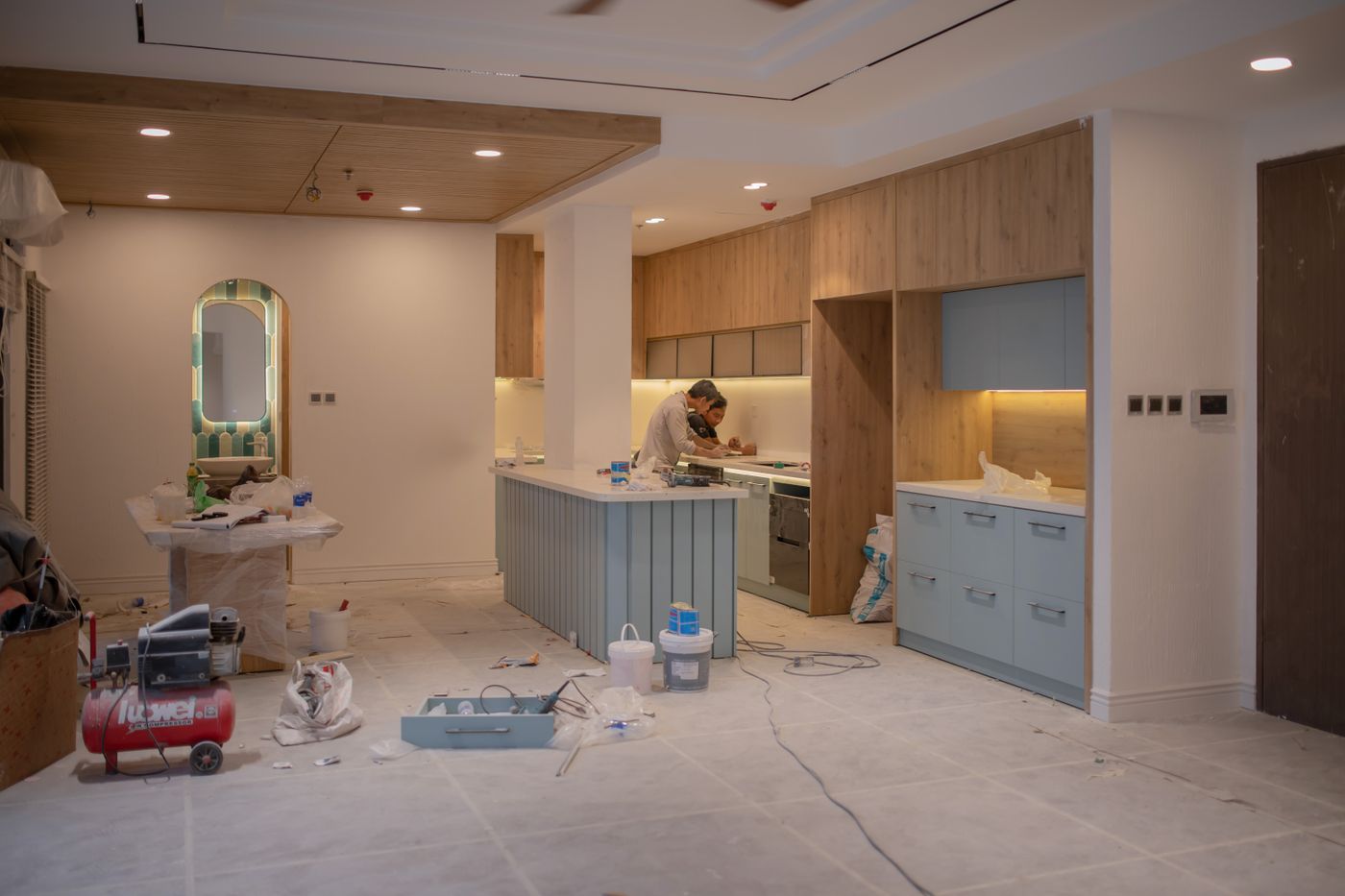
The renovation budget was bigger than the program allows.
The problem. The property needed more work than the VA renovation structure available on that file would support, and pretending otherwise would have wasted everyone's summer.
What I did. We priced the work against what the program allows, then looked at the alternatives honestly: phasing the work, a different property, or a different loan structure for the rehab portion.
How it ended. They are choosing between a smaller scope now and a different structure later. Both paths are real, neither was oversold.
Know the program's ceiling before you fall in love with the scope of work.
See If You Qualify Or call or text me at 937-572-3713.
What happens if the as-completed value comes in short?
You solve it, or the deal changes. In order of what usually works:
- Reconsideration of value. VA has a real process for challenging an appraised value with better comparable sales, and it costs nothing but time.
- Reduce the scope. Cut the work that adds the least value or the least safety, and keep what the appraiser and the MPRs actually require.
- Renegotiate the price. A seller with a house that will not appraise for a renovation buyer has fewer options than they think.
- Bring cash, if program rules allow it and it makes sense for you.
- Walk. Sometimes the right answer is a different house. That is not a failure, that is the appraisal doing its job.
VA HANDBOOK EXCERPT
“After the NOV has been issued, the Veteran may request reconsideration of value in writing by contacting the RLC of jurisdiction.”
That is the VA reconsideration of value process, and providing market data in support is encouraged. VA staff review within 5 business days, and a field review, if one is needed, is completed within 20 business days.
Source: VA Lender’s Handbook (Pamphlet 26-7) – Chapter 10: Appraisal Process, Topic 22
I wrote the step-by-step version here: VA appraisal came in low, Tidewater and reconsideration of value. On a renovation file, get the comparable sales question answered before the appraisal, not after.
What I will not tell you is that renovation financing creates instant equity. The as-completed value may or may not exceed your total project cost, and pretending otherwise is how people end up upside down on a house they cannot sell.
Want to sanity-check the numbers yourself?
Use my calculators to test the payment at the finished loan amount, including the repair budget and the contingency, before you commit to a scope.
Open the calculatorsWhat repairs are eligible, and what do lenders exclude?
VA's own test is the “ordinarily found on similar property of comparable value” standard above. Then each lender narrows it, and this is where the differences get sharp. Everything in the right two columns of this table is a lender rule, not a VA rule, taken from current program documents I verified on September 10, 2026.
| Work | Generally workable | Where lenders push back |
|---|---|---|
| Roof, gutters, siding, windows, doors | Yes | Nothing unusual, though weather timing matters in Ohio |
| Furnace, AC, water heater, electrical panel, plumbing | Yes | Permits and licensed trades required in most Ohio cities |
| Kitchens, baths, flooring, paint, accessibility work | Yes | Standard scope |
| Minor structural repair | Sometimes | One current guide allows minor structural only, and excludes anything needing engineering or architectural plans; another excludes structural work entirely |
| Room additions, ADUs, garages, foundation reconstruction | Rarely | Excluded outright by the guides I reviewed |
| New private well or new septic system | Rarely | Excluded by one current wholesale guide, which matters a lot in rural Ohio |
| Mold remediation, fire or flood damage repair | Rarely | Excluded as extensive remediation by one current guide |
| Pools, hot tubs, saunas, outdoor fireplaces, tennis courts | No | Excluded by lenders, and outside VA's own livability standard for supplemental loans |
| Anything already started before closing | No | Work in progress makes the file ineligible at the lenders I reviewed |
VA's supplemental loan rules are useful context for the spirit of all this: the work has to be “for the purpose of substantially protecting or improving the basic livability, or utility of the property,” and VA names barbecue pits and swimming pools as things that do not qualify. Fix the house, do not resort-ify it.
Have a repair list and want to know what is financeable? 30 second quiz.
Why do renovation lender rules vary so much, and how big can the budget be?
Because VA wrote two paragraphs and then left the operating rules to the market. Renovation lending is expensive to administer, only a handful of investors bother, and each one writes its own guide. Two lenders can both offer “VA renovation” and disagree on almost everything that decides whether your house works.
Every one of these is set by the lender, not by VA
- Maximum renovation amount, and minimum renovation amount.
- Maximum total loan amount, and whether they will go above the baseline conforming loan limit.
- Property condition at closing, and any habitability test.
- Contractor requirements: registration, licensing, insurance, how many contractors, whether you can do the work yourself, and family or ownership relationships.
- Which types of renovation are allowed, especially structural work, additions, wells, septic, mold and fire damage.
- Draw count, holdbacks, inspection schedule and who orders the inspections.
- Contingency reserve percentage.
- Completion deadline, and how soon work has to start.
- Credit score floor, DTI cap and whether manual underwriting is allowed.
- Property types: condos, 2 to 4 units, manufactured homes, mixed use.
The conforming loan limit trap
Here is one that costs Ohio veterans real money in Columbus and the Cincinnati suburbs. Several renovation programs will not write a loan above the national baseline conforming loan limit that FHFA publishes each year. One current wholesale guide says exactly that: loan amounts may not exceed the national baseline conforming limit, and high balance and jumbo are not permitted.
VA rule vs lender rule
What VA actually requires
For a veteran with full entitlement, VA does not cap the loan amount at all. VA.gov puts it plainly: with full entitlement, “You don’t have a loan limit (as long as you can afford the loan amount and the property appraisal supports the purchase price of the home).” The conforming loan limit matters to VA only in the entitlement math for veterans with partial entitlement.
What an individual renovation lender may require on top of it
A renovation program can still refuse to go above that conforming number, because it is their product, their investor and their appetite. That is a program restriction, not a VA loan limit, and a lender who tells you “VA caps you there” is wrong.
If your project needs a bigger loan than one renovation program allows, the answer may be a different lender rather than a smaller house.
Sources for that: VA loan limits and VA Circular 26-25-10 on the 2026 FHFA conforming loan limits.
How big can the renovation budget be?
There is no VA maximum. The range across programs is enormous, and it moves. In the programs I have been able to place a file with, repair budgets have run from roughly $50,000 at the tight end up to around $200,000 at the most generous, and that is my experience of the current market rather than a VA number. In published documents I can point at today: one wholesale guide caps renovation costs at $50,000 including fees and contingency (revised January 27, 2026), and two other current programs state no maximum at all and let the acquisition-cost and as-completed-value math be the ceiling (revised June 10, 2026 and August 28, 2026).
How to use those numbers without getting burned
- $50,000 is not a VA cap. Neither is $200,000. Both are program numbers that change without notice.
- Ask for the current maximum renovation amount in writing before you write an offer, especially if your scope is over $50,000.
- Ask separately whether the program has a maximum total loan amount, because those are two different ceilings.
- The real ceiling on most Ohio projects is the as-completed appraisal, not the program cap.
Big scope, and one lender already said it is too much? Let me check. 30 seconds.
What do renovation rates and costs actually look like?
Renovation rates are usually higher than the rate on a plain VA purchase. That is a market reality, not a VA rule, and it is worth understanding why so you can judge whether a quote is reasonable.
VA HANDBOOK EXCERPT
“VA does not prescribe interest rates for VA-guaranteed loans. The interest rate is negotiated between the Veteran-borrower and the lender to allow the Veteran to obtain the best available rate.”
So there is no such thing as a VA renovation rate. Pricing on this product is higher because it is a specialty program offered by fewer lenders, with draw administration, inspections and construction risk built into the margin.
Source: VA Lender’s Handbook (Pamphlet 26-7) – Chapter 3: The VA Loan and Guaranty, Topic 6
I am not going to quote you a rate on a web page, because any number I print here is wrong by the time you read it and rates depend on the whole file. What I will tell you is to compare the entire financing structure, not just the rate, because a renovation loan carries costs a normal purchase does not.
Costs that show up on a renovation file
- Renovation inspection fees, one per draw plus the final inspection.
- Draw administration or construction supervision fees.
- Title update fees between draws.
- Permit fees, which are a real line item in most Ohio cities.
- Contractor documentation and bid preparation work, sometimes an optional consultant write-up.
- The contingency reserve, which is financed money you may or may not spend.
VA HANDBOOK EXCERPT
“If the lender supervises the progress of construction and/or makes advances to a veteran in excess of 50 percent of the loan during construction, alteration, improvement, or repair, then the lender may charge the veteran up to two percent of the loan amount in addition to the lender’s one percent flat charge.”
This is the one place VA does speak to renovation pricing: on construction, alteration, improvement or repair loans a lender may charge an additional flat charge on top of the usual 1 percent, up to 2 percent when it is supervising construction and advancing more than half the loan, and up to 1 percent when it is not. Ask whether that charge is in your quote.
Everything else on the fee side follows normal VA rules, which I break down here: VA loan closing costs, what lenders can and cannot charge. The funding fee works the same way it does on any VA purchase, including the exemption if you receive VA compensation.
Does your contractor have to be VA approved?
No. The VA builder identification number was eliminated by Circular 26-25-1 on March 31, 2025, which states that a VA-issued builder ID is no longer necessary for issuing the Notice of Value or processing a loan on a new or proposed construction property. VA does add that builders are still expected to meet state and local licensing requirements. That circular is still listed as valid until rescinded, and I re-checked VA's circular index on September 11, 2026.
What still exists is lender approval of your contractor. Two of the three current guides I reviewed require a detailed bid, insurance and their own contractor review, and one 2026 correspondent profile still says the contractor must be registered with VA, which is now that lender's condition rather than a VA requirement. So the right phrase is lender-approved contractor, not “VA approved contractor.”
| Requirement | Who sets it | What it looks like in practice |
|---|---|---|
| VA RULE Builder ID | VA, and it is gone | No VA builder ID needed on a VA-guaranteed loan since March 31, 2025 |
| VA RULE State and local licensing | VA defers to the state | VA expects builders to meet state and local licensing rules. In Ohio that means city registration plus licensed trades, explained below |
| LENDER RULE Contractor approval package | The lender | Detailed bid broken to labor and materials, license or registration numbers, liability insurance (one program requires at least $100,000 per occurrence), references, W-9 |
| LENDER RULE How many contractors | The lender | One program permits a single general contractor, or up to two specialized contractors with a maximum of two payments each |
| LENDER RULE Self-help and DIY | The lender | Prohibited by every renovation guide I reviewed, even though VA does not prohibit it generally |
| LENDER RULE Identity of interest | The lender | No family members, no company you own or work for, no relationship with another party to the transaction |
| LENDER RULE Draw approval | The lender, and you | You sign off on draws before the contractor is paid, which is your leverage over quality and pace |
What contractor licensing actually means in Ohio
- Ohio has no statewide general contractor license for residential work. The Ohio Construction Industry Licensing Board licenses five trades only: heating, ventilating and air conditioning, refrigeration, electrical, plumbing and hydronics (ORC 4740.01). Nobody can show you a “state GC license” for remodeling a house, because it does not exist.
- Those state trade licenses are tied to commercial construction projects; the statute's definition of a construction project excludes residential buildings (ORC 4740.01(F)). For a house, the operative requirement is the city's contractor registration plus permits.
- Ohio cities run those programs directly. Dayton registers plumbing, mechanical, electrical and pipe-laying contractors and issues the permits. Columbus, Cincinnati and Cleveland have their own registration categories, including home improvement contractor classifications for one to three family dwellings.
- Ohio's Home Solicitation Sales Act (ORC 1345.23) gives you a three business day right to cancel certain contracts signed at your kitchen table. Know that before you sign a bid under pressure.
Sources: ORC 4740.01, ORC 1345.23, and the Dayton Division of Building Inspection contractor registration program. General information, not legal advice.
Two more contractor questions I get every week:
- Can I do the work myself? VA's own rules do not universally prohibit a veteran acting as their own contractor; on construction loans the handbook explicitly allows it with documented costs. But every renovation guide I reviewed prohibits self-help and do-it-yourself work. So in practice, on this product, you are hiring somebody.
- Can my brother-in-law's company do it? Usually no. Current guides bar any identity or conflict of interest between borrower and contractor, including family members and companies the borrower works for or owns.
Have a contractor and a bid already? Let me check the file. 30 second quiz.
What happens after you close on a VA renovation loan?
The renovation money does not come to you at the closing table. Here is the sequence, with each step labeled so you know who is imposing it.
- VA RULE The appraisal is done subject to the bid. Before closing, the appraiser values the house as completed using your contractor's scope, and the appraisal is written subject to those repairs.
- LENDER RULE The loan closes and the renovation funds go into an escrow or draw account. You are not handed the money, and the contractor is not paid in full up front. One current program funds the full loan amount at closing with the repair money held and administered by servicing.
- LENDER RULE Work starts inside the lender's window. One program requires construction to begin within 15 days of closing and can call a stoppage longer than 15 days a default.
- LENDER RULE Draws are inspected and released. Draws are based on percentage of completion, one current program allows up to three draws with an initial draw of $0, and another holds back 10 percent of every intermediate draw until the end.
- You approve each draw. On the programs I use, your written approval is part of the draw package. If the work is not right, that is the moment you have leverage.
- LENDER RULE Local permits and inspections get closed out. City or county, on their calendar, not your lender's.
- VA RULE MPR items are actually corrected, then the final inspection happens. Repair inspections on existing properties are completed by appraisers assigned by VA when the Notice of Value requires them, and one current program orders the final inspection from the VA appraiser at 100 percent complete.
- VA RULE The file is finished and guaranteed. Repairs complete, escrowed funds distributed, then VA guarantees the loan. Leftover contingency money is normally applied to your principal balance unless you funded it yourself at closing.
VA HANDBOOK EXCERPT
“When required on the NOV, repair inspections are completed by appraisers assigned by VA for:”
That is the VA side of the finish line: the repair inspection is done by a VA-assigned appraiser, not by your lender's employee, when the Notice of Value calls for it. The handbook also encourages lender certification of some repairs, and lead-based paint repairs must be certified by the fee appraiser.
Source: VA Lender’s Handbook (Pamphlet 26-7) – Chapter 10: Appraisal Process, Topic 23
And yes, you make mortgage payments during construction. One investor's current profile will not even buy a renovation loan where no payments were made during the renovation period. If you are also paying rent somewhere else during the work, budget for both.
Story time: this one closed
The loan closed. I was still chasing the inspection record.
The problem. A renovation file had already funded, but the record of the final inspection on the renovation work was not showing up anywhere it was supposed to be.
What I did. I went back through our file, established exactly what we had and what date the last activity was, then pushed the construction and post-closing side for the missing record instead of assuming somebody else was handling it.
How it ended. The loan had funded weeks earlier. The paperwork chase was mine to finish, and it got finished.
On renovation loans, the work after closing is where files go quiet. That is exactly when to make noise.
See If You Qualify Or call or text me at 937-572-3713.
How different are draws, inspections and deadlines from lender to lender?
Wildly, and the spread is wide enough to change which house you should buy. All three of these documents were verified on September 10, 2026, and all three can change without notice.
| Item | Wholesale lender A (guide revised June 10, 2026) | Wholesale lender B (guide revised January 27, 2026) | Correspondent investor C (profile dated August 28, 2026) |
|---|---|---|---|
| Minimum credit score | 580 | 620 | 580 on the purchase grid, 660 if manual |
| Maximum repair amount | None stated | $50,000 including fees and contingency | None stated; limited by the acquisition-cost math |
| Contingency reserve | 15 percent required | 10 percent minimum, 15 percent maximum, 15 percent if utilities were off at inspection | Up to 15 percent, no minimum stated |
| Draws | Up to 3, initial draw $0, 3 inspections | Maximum 3, with a 10 percent holdback on intermediate draws | Does not administer draws; the originating lender does |
| Completion window | 6 months from closing | 120 days from the note date, work must start within 15 days | None stated; the loan must be complete and final-inspected before it is sold |
| HUD consultant | Not required, may be used | Not required | Not addressed |
| Purchase or refinance | Purchase and cash-out refinance | Purchase at 100 percent, refinance capped at 90 percent | Purchase only |
Look at the completion window column. One program gives you six months, another gives you 120 days and wants work started within 15 days of closing. In Ohio that is not a detail. If you close in November with roof and exterior work in the scope, a 120-day window means your contractor is working in January and February. VA sets none of these deadlines.
How to keep an Ohio renovation timeline honest
- Ask for the completion deadline in writing before you choose the program, then ask your contractor to commit to it in the bid.
- Schedule exterior work first if you are closing in the fall, interior work if you are closing in early spring.
- Budget the permit time. Ohio cities issue the permits and inspect the work, and their calendar is not your lender's calendar.
- Ask what happens if the work runs past the deadline, and get the answer before closing.
Closing this fall with exterior work in the scope? Let me check the timeline.
What is a contingency reserve, and how much do you need on an Ohio house?
A contingency reserve is extra financed money set aside for what the contractor finds after the walls are open. It is part of your loan amount and part of the acquisition cost, and if you do not spend it, it normally goes to reduce your principal balance.
VA does not currently set a contingency percentage. The 15 percent figure you see quoted everywhere traces back to Circular 26-18-6, which was rescinded April 1, 2020, so anyone citing it as a current VA rule is quoting a dead document. What is real is what your lender requires, and here is the current spread from the documents I verified on September 10, 2026: one program requires 15 percent on every loan, one requires a minimum of 10 percent and a maximum of 15 percent, with 15 percent mandatory if the utilities were off when the property was inspected, and one allows up to 15 percent without requiring any.
Why the cushion matters more on an older Ohio house
- Knob and tube or cloth-wrapped wiring behind plaster, discovered when the electrician opens a wall in a 1920s house.
- Galvanized or lead supply lines, or a cast iron waste stack that turns out to be rotted.
- Roof decking that has to be replaced once the old shingles come off, which is not in most roofing bids.
- Foundation and basement moisture problems, common in Ohio houses with stone or block foundations and original drainage.
- Hidden water damage under a bathroom floor or behind a kitchen wall.
- Asbestos wrap on old ductwork or pipe insulation, which changes who is allowed to do the work.
One more Ohio-specific reason to want the bigger cushion: on a vacant house the utilities are often off when the appraiser and the contractor walk it, so nobody has actually run the furnace, filled the tub or tested the sewer line. That is exactly the scenario one lender addresses by requiring the full 15 percent.
Not sure how much cushion your project needs?
Send me the bid and the age of the house. I will tell you where I would expect surprises and what the program requires.
Have me look at the bidWhat if you want to change the project after closing?
Then you ask, in writing, and you wait for an answer. You cannot redesign the project after closing on your own. Everything about the loan, including the appraised value, was built around the scope in the approved bid.
Three versions of this come up constantly:
- “We want to upgrade the kitchen more.” This is a want, not a need, and it is the hardest one to get approved. It adds cost, it may not add appraised value, and there is usually no additional financing available for it.
- “We found another $15,000 of electrical work.” This is what the contingency reserve exists for. If the contingency covers it, this is a normal change order. If it does not, you are looking at cash or a reduced scope elsewhere.
- “We decided to add a project.” Expect a no on anything the program excludes anyway, like an addition or structural work, and expect a fresh look at the appraisal if the scope changes materially.
What a change order actually involves
- Lender approval before the work happens. Not after.
- Revised contractor documentation: an updated bid, line items, and permit implications.
- A look at whether the as-completed value still supports the new numbers, which can mean going back to the appraiser.
- Possible additional inspection fees, and one current program will not even accept a change order until 50 percent of the repairs are complete.
- The completion deadline does not move just because the scope grew.
The practical advice: overbuild the scope on paper before closing rather than after. It is far easier to include the water heater in the original bid than to add it in month three.
What is different about renovating an older Ohio house?
Ohio's housing stock is old. About 24 percent of Ohio housing units were built before 1950, against roughly 16 percent nationally, and northwest Ohio is the highest region in the state at about 30 percent, per OHFA's housing needs assessment using Census data. Urban cores in Cleveland, Dayton, Toledo, Akron and Cincinnati run far higher than the state average. That is why renovation financing is more useful here than in a state full of 1990s subdivisions, and it is also why the same three or four items show up in Ohio scopes.
There is one VA requirement that is specific to Ohio
Ohio is on VA's statewide wood-destroying insect list. VA's local requirements page says “Wood-destroying insect information is required for the entire state of” a list of states that includes Ohio, so on an Ohio purchase or cash-out refinance a wood-destroying insect report is normally required on the Notice of Value regardless of what the appraiser saw. That is a VA requirement, not a lender preference.
VA HANDBOOK EXCERPT
“Appraisers must report any apparent evidence of wood destroying insect infestation, fungus growth or dry rot. The appraisal must be prepared subject to a wood destroying insect inspection if any infestation or damage is apparent, and all damage must be repaired.”
On a renovation file this matters twice: the inspection can add a repair item to your scope, and termite or rot damage in a joist or sill plate can turn a cosmetic project into a structural one, which most renovation programs either restrict or exclude.
Source: VA Lender’s Handbook (Pamphlet 26-7) – Chapter 12: Minimum Property Requirement, Topic 33
Source you can check yourself: VA local requirements, wood-destroying insect information, verified September 11, 2026.
What older Ohio houses actually need
Not every old house has these problems, and plenty of century homes here are in better shape than 1980s builds. But this is what I see in Ohio scopes, by market:
| Ohio market | What comes up most in renovation scopes |
|---|---|
| Cleveland and inner-ring suburbs | Original wiring in pre-1940 stock, slate or three-layer shingle roofs, porch and masonry repair, plus point-of-sale inspection requirements in several Greater Cleveland cities that can force repairs before transfer |
| Dayton and Montgomery County | Furnaces and boilers at end of life, knob and tube behind plaster, basement moisture, peeling pre-1978 exterior paint, aluminum wiring in 1960s and 1970s builds |
| Cincinnati and Hamilton County | Hillside foundation and retaining wall issues, older galvanized supply lines, steep-roof access costs, historic district review in some neighborhoods |
| Toledo and northwest Ohio | The oldest regional housing stock in the state, so roofs, wiring, plumbing and windows in the same scope, plus wet-clay soil movement affecting foundations |
| Akron and Canton | 1920s bungalows and four-squares with original electrical panels, chimney and roof flashing, and knee-wall insulation and ventilation problems |
Permits are a local matter, and VA approval does not replace them
Ohio has a statewide residential building code, but it is enforced by certified municipal, township and county building departments (ORC 3781.10). Practically, that means the rules for permits, inspections, fees and timelines are set where the house sits, and a Columbus permit process looks nothing like an unincorporated township with county enforcement. Your lender approving the bid and VA guaranteeing the loan does not permit a single thing. If the scope includes electrical, plumbing, HVAC, structural or a water heater, expect permits, and expect the local inspector's calendar to be part of your timeline.
Could your Ohio renovation qualify for a property tax abatement?
Possibly, if the house sits in a Community Reinvestment Area. Ohio law lets a city, county or limited home rule township designate CRAs and then exempt part of the increased assessed value that results from remodeling. Under ORC 3735.67, for a dwelling with not more than two family units, remodeling that costs at least $2,500 can qualify, up to 100 percent of the increased assessed valuation can be exempted, and the local legislative authority sets the term, which cannot exceed 15 years.
- This is not a VA benefit. It has nothing to do with your loan, your entitlement or your lender.
- It is location specific. The property has to be inside a designated CRA, and plenty of Ohio addresses are not.
- The rules vary by municipality. Percentage, term and eligible work are set by local resolution, and some programs require application before construction starts.
- You have to verify it locally. Applications go to the housing officer designated for that CRA, who verifies the remodeling cost and forwards it to the county auditor.
Sources: ORC 3735.65 and ORC 3735.67. General information, not tax or legal advice. Ask your city or county CRA housing officer before you count on it.
Radon, while you have the house open
Radon testing is not a VA Minimum Property Requirement. VA removed the radon gas subtopic from Chapter 12 in the February 27, 2026 revision, so nobody should tell you VA requires a radon test. It is still worth doing here. The Ohio Department of Health reports that elevated indoor radon has been found in homes in every Ohio county and that roughly half of Ohio homes tested each year come back elevated, against the EPA action level of 4 pCi/L. If you are already replacing a basement floor, sealing a sump or reworking HVAC, that is the cheapest moment in the life of the house to add mitigation. Ohio licenses radon testers and mitigation contractors under ORC Chapter 3723, so use a licensed one.
Older Ohio house with a long repair list? Start with the 30 second quiz.
What about rural Ohio: wells, septic, access and outbuildings?
Rural and small-town Ohio is where the property side gets interesting, because the house is only part of the file. Wells, septic systems, outbuildings, road access and acreage all carry their own VA requirements and their own local requirements, and renovation programs treat some of them badly.
| Item | The VA requirement | The Ohio or lender reality |
|---|---|---|
| Private well | Water quality has to meet the health authority with jurisdiction, or EPA guidelines if the local authority has none. Testing must be done by a disinterested third party, and the veteran may never collect or transport the sample (Ch.12 Topic 16) | Private water systems are regulated under OAC 3701-28 and permitted by the local health district. Several Ohio counties also require a well evaluation and a certificate before transfer, which is a closing timeline item |
| Septic system | An individual sewage disposal system must dispose of all domestic wastes in a sanitary manner that does not create a nuisance or endanger public health, and health authority approval is required where the appraiser notes a problem or soil percolation is known to be poor (Ch.12 Topic 17) | Sewage treatment systems are governed by OAC 3701-29 and permitted by the local board of health. New system installs are excluded by at least one current renovation program, so a failed septic can be the item that kills the renovation structure |
| Access | Safe and adequate access from a public or private street with an all-weather surface, and private roads need a permanent easement plus a maintenance arrangement (Ch.12 Topic 4) | Shared gravel drives and unrecorded easements are common on rural Ohio parcels and can take weeks to document |
| Outbuildings and acreage | VA values the residential use of the property; barns and outbuildings are not the point of the appraisal and small detached non-residential improvements can be excluded from a termite report | Renovation programs generally will not finance barn or outbuilding projects, and a large parcel makes comparable sales harder, which raises appraisal risk on a big scope |
The pattern to remember: VA cares that the water is safe and the waste is handled. Your county health district cares about permits, setbacks and transfer certificates. Your lender cares whether the repair is on its eligible list. Those are three separate approvals, and a rural file needs all three.
Rural Ohio property with a well, a septic system or a shared drive?
Tell me the county and what the house needs. Those files take longer, so the sooner I see it the better.
Walk me through my scenarioCan you use it on a condo, a duplex, a manufactured home or a refinance?
It depends on the lender more than on the VA, and the differences are dramatic:
- Condos. Have to be VA-approved. One current program allows interior renovation only, and lenders may require HOA approval of your scope.
- Two to four units. One guide allows one and two units, another allows two to four, another allows two to four with reserves when rental income is used. Ohio doubles are everywhere, so this is worth asking about early. One program only counts rental income from units that are not part of the renovation.
- Manufactured homes. Allowed by two of the three programs I reviewed, ineligible at the third, with extra restrictions where allowed.
- Mixed use. Excluded by the guides I reviewed. If you are looking at a storefront with an apartment above it, that is a different conversation: mixed-use financing in Ohio.
On refinancing, VA's own rule allows alteration and repair on a purchase or a regular cash-out refinance of a home you own and occupy. Lenders narrow that too: one program is purchase only, another caps refinance at 90 percent of value. If you already have a VA loan on the house, ask about a supplemental loan as well, which is a separate handbook route with its own rules, including a Notice of Value and compliance inspections once the work exceeds $3,500.
Credit is the other place this product is stricter than a normal VA loan. Published minimum scores on the current renovation programs run 580 to 620, and one of those lenders will go down to 550 on its standard VA program, so the renovation overlay is the binding constraint. If credit is your issue, start with bad credit VA loans in Ohio and VA manual underwriting in Ohio.
Would FHA 203(k), HomeStyle or a cash-out refinance be a better tool?
Frequently, yes. Being straight about this is part of the job.
| Program | Where it wins | Where it loses |
|---|---|---|
| VA renovation | Zero down, no mortgage insurance, funding fee waived if you receive VA compensation | Few lenders, tight scopes, lender caps and deadlines, no structural work at most lenders |
| FHA 203(k) | Widely available, standard version handles bigger and structural projects, consultant support | Down payment required, mortgage insurance for the life of most loans, more paperwork |
| Fannie Mae HomeStyle or Freddie CHOICERenovation | Large scopes, luxury items, investment and second homes in some cases | Down payment and credit requirements, mortgage insurance under 20 percent equity |
| VA cash-out refinance | Simple, no draws or inspections, you control the money and the timeline | You have to own the home and have equity, and the rate applies to the whole balance |
| Buy it, then pay cash for repairs | Simplest of all if the house already meets MPRs | Needs cash, and does not solve a house that cannot pass the appraisal |
Ohio-specific comparisons I keep on the site: FHA 203(k) in Ohio, HomeStyle in Ohio, renovation mortgage loans in Ohio, and a direct VA renovation versus 203(k) comparison.
Want me to compare VA renovation against 203(k) on your actual numbers?
What can kill a VA renovation deal, and when is it the right tool?
The honest summary is this: a VA renovation loan can solve a property-condition problem that a normal VA purchase cannot, and it has more moving pieces than any other loan I do. Both halves of that sentence are true, and you should hear the friction before you commit.
- Lender availability. A handful of investors, and programs change without notice. Product menus in 2026 do not look like 2024.
- The appraisal ceiling. Covered above. In lower-priced Ohio markets this is the number one killer.
- Contractor risk. Your contractor has to produce a detailed bid, meet the lender's requirements, work inside the deadline and accept draw-based payment. Not every good contractor will.
- Timeline. Longer to close than a normal purchase, and the clock keeps running after closing.
- Change orders and overruns. The contingency reserve exists for surprises, and a 10 or 15 percent cushion on a $75,000 job is not unlimited.
- You are making payments during construction. On one investor's profile a loan with no payments made during the renovation period is not even eligible for purchase.
When this is genuinely the right tool
- The house has real repair needs, the seller will not fix them, and you do not have cash to fix them after closing.
- The work is on the ordinary list: roof, mechanicals, kitchen, bath, flooring, windows, accessibility.
- The scope fits the program's cap and the lender's completion window.
- You have a real contractor with a real written bid who will work on draws.
- The as-completed value in that neighborhood supports price plus repairs.
- You are using zero down and no mortgage insurance to buy a house nobody else can finance.
When those pieces line up, this is one of the most useful loans in the VA program. When they do not, the right answer is a different scope, a different program or a different house, and I would rather tell you that in week one than in month three.
Ohio VA renovation questions I get every week
Does the VA really have a renovation loan?
Yes. VA may guarantee a loan for alteration and repair, either on a home you own and occupy or in conjunction with a purchase loan. Chapter 7, Topic 4 of the VA Lender's Handbook is the authority.
Why are VA renovation loans so hard to find?
Because they are operationally expensive for lenders: bids, draws, inspections, escrow administration and deadline management on a zero-down loan. Few investors bother, so most loan officers have never done one.
Is there a VA maximum renovation amount?
No. One current wholesale program caps repairs at $50,000 including fees and contingency; two others state no maximum. In the programs I can place, budgets have run from about $50,000 up to roughly $200,000. Those are lender numbers, not VA numbers, and the real ceiling is usually the as-completed value.
Is my VA renovation loan capped at the conforming loan limit?
Not by VA. With full entitlement VA does not cap your loan amount. Some renovation programs will not exceed the FHFA baseline conforming loan limit, which is that program's restriction.
Are VA renovation rates higher?
Usually yes, because fewer lenders offer the product and it carries draw administration and construction risk. VA does not prescribe interest rates or mandate a renovation rate. Compare the whole structure, including inspection, draw and title update fees.
How long do I have to finish the work?
Whatever your lender's program says. Current published windows range from 120 days from the note date to six months from closing. VA does not set a universal deadline.
Can I buy a house that fails the VA appraisal?
Often yes. MPR deficiencies can be corrected through the renovation, and the property has to meet MPRs before VA guarantees the loan, which happens after the work is finished and inspected. Whether that specific house qualifies is a lender question.
Does the house have to be habitable at closing?
That is a lender rule, not a VA rule. VA's alteration and repair guidance does not impose a day-of-closing habitability test, but one current program requires the home to be habitable at application, at closing and during construction.
Do I need a wood-destroying insect report in Ohio?
Normally yes. Ohio is on VA's statewide wood-destroying insect list, so the report is generally required on the Notice of Value. That is VA, not your lender.
Is a radon test required?
Not by VA. Radon was removed from Chapter 12 in the February 27, 2026 revision. Ohio has widespread elevated radon, so testing is still a good idea, especially before you close up a basement.
Does my contractor have to be VA approved?
No. VA eliminated the builder identification number in March 2025. Your contractor does have to satisfy your lender, plus Ohio local registration and permit requirements.
Can I be my own general contractor?
Not on the renovation programs I have reviewed. They prohibit self-help. VA's own rules are not a blanket prohibition, but the lender's rule is what governs your file.
Can I finance a new septic system or a new well?
Not at every lender. One current wholesale guide excludes new private wells and septic systems outright, which matters in rural Ohio. Repairs to an existing system are a different question, and your county health district will be involved either way.
Can I add a bedroom, a garage or an ADU?
Generally no on the current programs. Room additions and ADUs are excluded, and structural work is either excluded or restricted to minor repairs.
Does the contractor get money at closing?
Usually not. One current program specifies an initial draw of $0, with later draws based on inspections and percentage of completion, and you approve the draws.
Can I live in the house during the renovation?
On these programs you generally must be able to. Projects that prevent occupancy are excluded at the lenders I reviewed.
What if the work costs more than the appraised value supports?
You reduce the scope, renegotiate, request a reconsideration of value, or bring cash. The gap does not disappear.
Can I change the scope after closing?
Only with lender approval, revised contractor documentation and possibly another look at value. One program will not accept a change order until 50 percent of the work is done.
How long does a VA renovation purchase take to close in Ohio?
Longer than a standard purchase, because the bid, the contractor review and the as-completed appraisal all have to happen before closing. Start earlier than you would on a normal file.
How do we start on your house?
Send me the house and the repair list. That is genuinely all I need to give you a real answer instead of a brochure answer.
What I will ask about your project
- The address and the price, because comparable sales set the ceiling.
- What the house needs, and whether anything is structural.
- Whether it is livable today, including heat, water and a working bathroom.
- Whether you have a contractor and a written bid.
- Whether it is on city water and sewer or a well and septic.
- Your rough credit picture, because this product has the tightest overlays.
Ready to find out if your fixer-upper works?
Start with the 30 second quiz and describe the house in the notes, or call and text me at 937-572-3713. I will tell you honestly if another program fits better.
Check my renovation scenarioMore reading: my national VA renovation guide for the program in general, VA renovation FAQs, VA loans in Ohio for the basics, Ohio tax prorations for the cash to close side, and the Ohio disabled veteran property tax exemption if you have a 100 percent rating.
Carlos Scarpero, Mortgage Loan Originator, NMLS #1674385 | Edge Home Finance, LLC, NMLS #891464 | Licensed to originate VA loans in Ohio | 937-572-3713 | Equal Housing Opportunity. Lender program terms described on this page come from published program guidelines verified September 10, 2026; they are examples of how overlays differ, they change without notice, and they are not offers. Nothing here is legal advice or a commitment to lend.